
 Facebook
 X
 Pinterest
 Copy Link
If you’re thinking about selling your home in Navarre, Gulf Breeze, or Pensacola, there’s something I want you to consider.
Your competition may not be another resale home down the street.
It may be a brand-new house in a nearby subdivision.
And that changes how we need to think about your listing.
I’ve been around homebuilding for years, and I understand why buyers get excited about new construction. Fresh finishes, modern floor plans, builder warranties, and the possibility of choosing certain features can be appealing.
But I’ve also helped enough families buy and sell existing homes to know that newer doesn’t automatically mean better for every buyer.
The key is understanding what those buyers are comparing—and making sure your home gives them good reasons to take a closer look.
First, Know What New Construction Is Offering
Before we decide how to position your home, I want to know what builders in your area are doing.
What are their asking prices?
What comes standard?
Are they offering closing cost assistance, interest-rate incentives, or upgrades?
How long will buyers have to wait before moving in?
These details matter because buyers aren’t always comparing homes based on price alone.
A builder may advertise an attractive incentive that changes a buyer’s estimated monthly payment. Another builder may have a completed home ready for a quick closing.
And sometimes the advertised starting price doesn’t include everything a buyer expects.
I’ve written before about why new construction isn’t always more expensive than buyers think.
That comparison works both ways.
As a seller, we need to understand the actual alternatives buyers have—not just what a new home looks like in an advertisement.
Your Established Home May Offer Things New Construction Doesn’t
One of the biggest advantages of an existing home is that buyers can see what they’re getting.
The landscaping is established.
The neighborhood has taken shape.
They can see the surrounding homes, traffic patterns, and how the property sits on the lot.
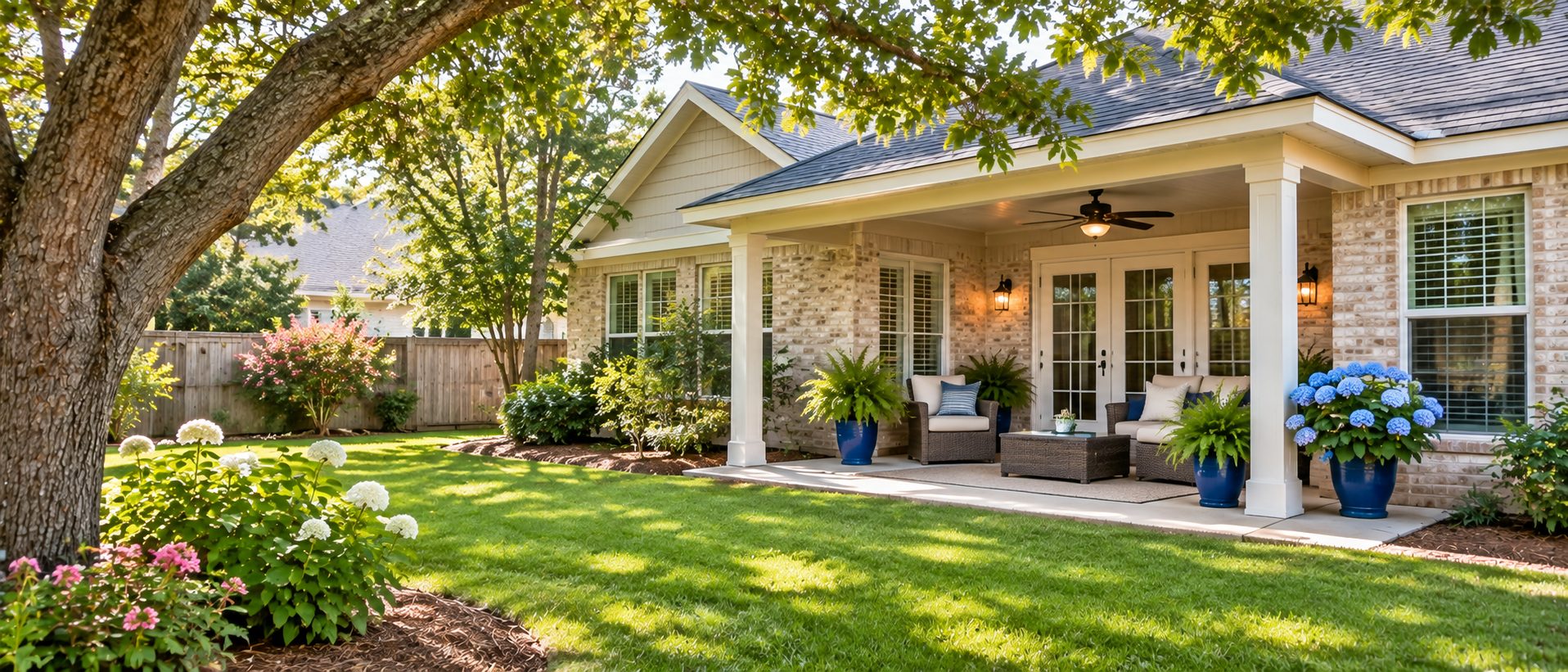
Maybe your backyard has mature shade trees.
Maybe your home has a larger lot than some of the newer subdivisions nearby.
Maybe you’ve added a screened porch, fencing, storage, or other improvements that a buyer would otherwise have to pay for after purchasing a new home.
Those things have value.
But here’s the important part.
We can’t assume buyers will recognize that value on their own.
We have to show them.
If your home has a spacious backyard, the photography should communicate it.
If you’ve invested in meaningful improvements, those should be documented and presented accurately.
If your neighborhood offers advantages that matter to families, we need to make those easy to understand.
A strong listing doesn’t just describe the house. It helps buyers understand what they’re getting for their money.
Condition Matters More When Everything Else Looks Brand-New
I’m going to be straightforward about this.
If buyers are touring spotless new construction homes, they’re going to notice deferred maintenance when they walk into yours.
That doesn’t mean your home needs to look brand-new.
It does mean we should address the things that make buyers wonder what else might need attention.
Peeling paint, damaged trim, worn flooring, neglected landscaping, or visible repair issues can affect how buyers perceive the property.
And sometimes a relatively small problem creates a much bigger concern in a buyer’s mind.
I don’t believe in spending money just to spend it before listing.
In my earlier article, I explained which home improvements actually add value before you sell.
The goal here is different.
We’re not trying to turn an established home into new construction.
We’re making sure its condition supports the price we’re asking and doesn’t distract buyers from its strengths.
Price Against the Choices Buyers Actually Have
This is where good strategy becomes especially important.
You may love your home. You’ve made memories there, invested in improvements, and taken care of it for years.
I respect that.
But buyers are looking at their choices today.
If a nearby builder is offering a new home with similar square footage, we need to understand how your home compares.
That doesn’t mean we automatically price below new construction.
Your lot, location, improvements, floor plan, and neighborhood may justify a different value.
On the other hand, we can’t ignore builder incentives or assume buyers will pay more simply because your home is in an established neighborhood.
We’ll look at comparable resale sales, active competition, and relevant new construction offerings.
We’ll also pay attention to what buyers are responding to in the current market.
The right asking price should make sense in the market you’re selling in—not the market you remember.
That’s part of the approach I discussed in what actually matters when you’re thinking about selling in today’s market.
Make the Differences Easy to See
Sometimes sellers focus so much on competing with new construction that they forget to emphasize what makes their home appealing.
Maybe your home offers a flexible room that works as an office or playroom.
Maybe the garage has additional storage.
Maybe the backyard is already fenced and ready for pets.
Maybe buyers won’t have to wait months for construction to finish or arrange landscaping after closing.
Those details can make a real difference to a family.
But the presentation needs to be thoughtful.
Professional photography, accurate property information, and a clear description of the home’s features all help buyers make meaningful comparisons.
I also want the listing to be honest.
We shouldn’t describe something as an upgrade unless we can explain what it is.
And we shouldn’t promise that a feature adds a certain amount of value without market support.
The best presentation makes the home’s advantages clear without overselling them.
Don’t Try to Win Every Buyer
Here’s something sellers don’t always expect me to say.
Not every buyer is going to choose a resale home.
Some people want brand-new construction. They want the finishes, the warranty, and the experience of being the first owner.
That’s fine.
We’re not going to change every buyer’s mind.
Our job is to position your home for the buyers who will appreciate what it offers.
That might be a family looking for an established neighborhood.
Someone who wants mature landscaping and outdoor space.
A buyer who needs to move sooner than a builder’s timeline allows.
Or someone who simply prefers the character and layout of an existing home.
When we understand who your home is likely to appeal to, we can make better decisions about presentation, marketing, and pricing.
A Good Seller Strategy Starts With Knowing the Competition
I don’t believe a resale home should automatically be treated as second choice just because there’s new construction nearby.
But I also don’t believe sellers should ignore what builders are offering.
Both approaches miss the point.
A successful listing strategy starts with understanding the market, recognizing your home’s strengths, and being realistic about its condition and price.
My background around homebuilding gives me a useful perspective on what buyers are seeing when they tour new homes.
And my experience helping families sell gives me another perspective: what it takes to make an existing property stand out.
If you’re considering selling in Navarre, Gulf Breeze, Pensacola, or the surrounding communities, let’s look at your home and the competition together.
We’ll talk about what makes your property appealing, what deserves attention before listing, and how to position it for the buyers most likely to appreciate it.
Because selling successfully isn’t about pretending your home is something it isn’t.
It’s about understanding what it offers—and making sure the right buyers see it.
That’s how we build a smart selling strategy from the ground up.
Lorie Coogle
REALTOR® | ERA American Real Estate
From the Ground Up
